Digital Literacy
Every time we leave our home, we make sure the door is locked.
We check the windows. We protect our belongings. We would never invite a stranger inside without knowing who they are.
But what about our minds?
Every day we unlock our phones without a second thought. Through that small screen, thousands of ideas, opinions, advertisements, videos, headlines, and emotions quietly enter our lives. Most of the time, we never stop to ask where they came from or what they want from us.
Perhaps it is time to protect our minds with the same care we use to protect our homes.
Digital literacy is not only about knowing how to use technology. It is about learning how to choose what deserves a place in your mind.
Your Mind Is Also a Home:
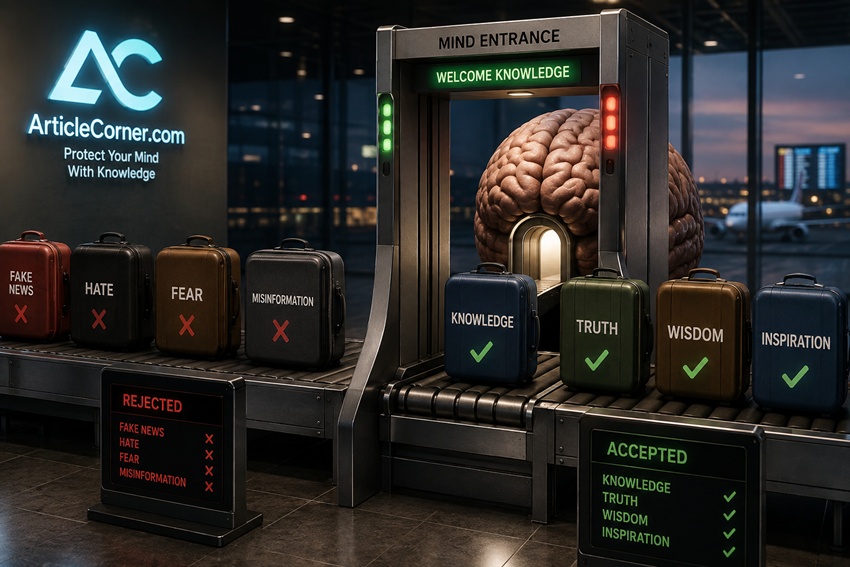
Imagine your mind as a house.
Would you leave the front door open all day and allow anyone to walk inside?
Probably not.
Yet every day we allow countless pieces of digital content to enter our thoughts without any questions. Some inspire us. Some educate us. Others manipulate us, frighten us, or quietly influence the way we see the world.
Every piece of content leaves something behind.
Sometimes it is knowledge.
Sometimes it is fear.
Sometimes it is hope.
Sometimes it is anger.
Over time, these small moments shape our beliefs, our decisions, and even our personality.
Information Is Food:
We carefully choose what we eat because we know unhealthy food affects our body.
Our minds deserve the same care.
Information is food for the brain.
Some information helps us grow.
Some makes us curious.
Some teaches us compassion.
Some simply fills our minds with noise.
If you spend every day reading angry headlines, you may begin to believe the world is only filled with anger.
If you constantly compare your life with carefully edited lives on social media, you may forget how valuable your own life already is.
The content we consume becomes part of the way we think.
Not Everything Deserves Your Attention:
The internet is one of the greatest libraries ever created.
It is also one of the busiest marketplaces.
There are teachers.
There are scientists.
There are artists.
There are storytellers.
There are also people whose only goal is to attract attention, create conflict, or spread misinformation.
Popularity does not always mean quality.
Millions of views do not guarantee truth.
Before believing something, ask a simple question.
Who benefits if I believe this?
That single question can protect your mind more than any software.
Algorithms Are Always Learning:
Every click tells a story.
Every video you watch.
Every article you read.
Every post you like.
Every second you spend looking at something teaches algorithms what to show you next.
Slowly, your digital world becomes smaller.
You begin seeing more of what you already believe and less of anything that challenges your thinking.
Without realizing it, your screen can become an echo chamber instead of a window to the world.
Learn to Pause:
One of the most powerful digital skills is surprisingly simple.
Pause.
Pause before sharing.
Pause before reacting.
Pause before becoming angry.
Pause before believing.
A few thoughtful seconds can prevent hours of misunderstanding.
Choose Your Digital Guests Carefully:
We choose our friends carefully.
We choose the books we read.
We choose the food we eat.
Perhaps we should also choose the content we consume with the same care.
Every article, every video, every conversation becomes a guest inside your mind.
Some guests leave wisdom behind.
Others leave confusion.
The choice is yours.
Final Thoughts:
Technology is not the enemy.
The internet is not the enemy.
Artificial intelligence is not the enemy.
The real challenge is learning to think independently in a world that constantly competes for our attention.
Your home deserves a strong lock.
Your mind deserves an even stronger one.
Because every idea you allow inside has the power to shape the person you will become tomorrow.
ArticleCorner: Guard Your Mind in a Digital World.
Writer: articlecorner.com