ArticleCorner Science:
How Does a Mobile Phone Work?
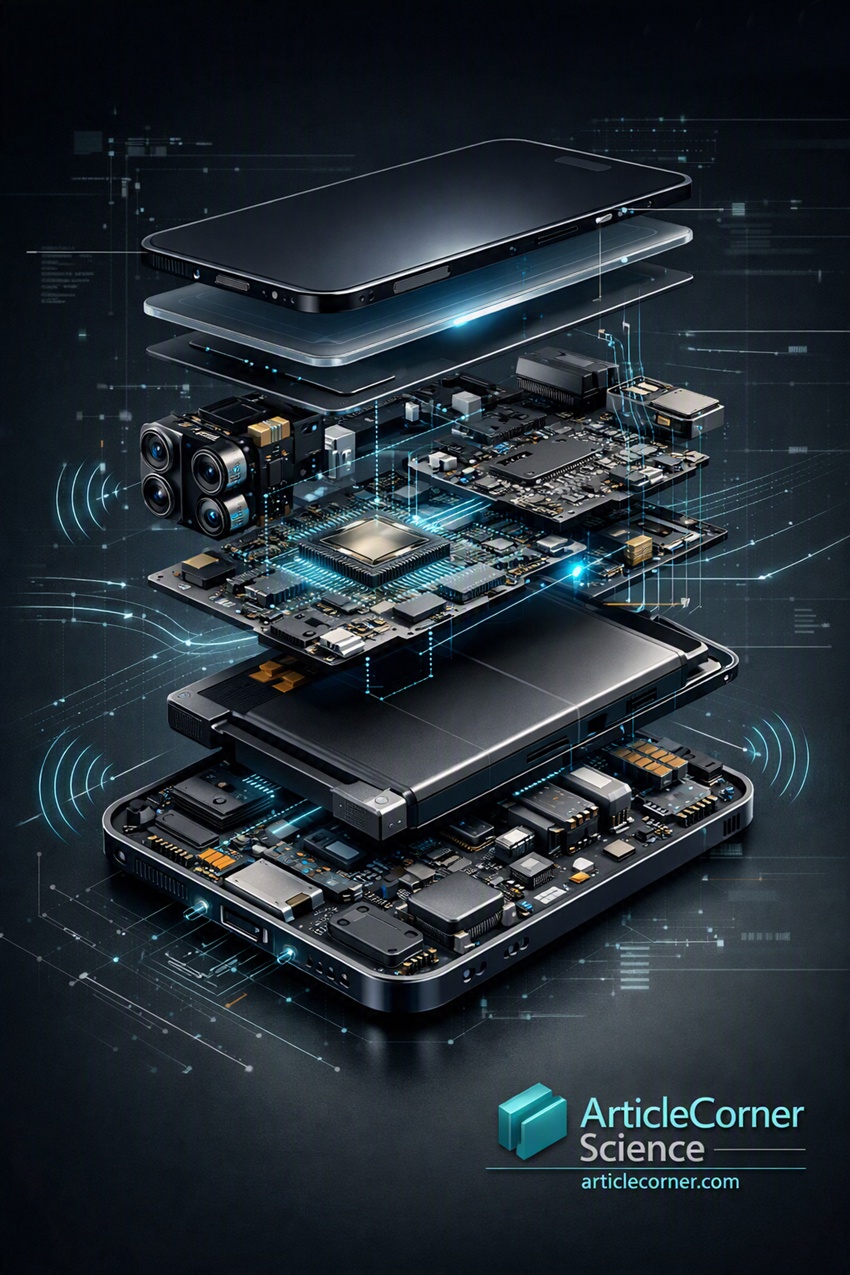
When we look at a mobile phone, we see a small screen, a few cameras, and a battery. But inside this small device, many different technologies work together at the same time.
A phone can turn our voice into digital data, transform light into photographs, understand our touches, connect to satellites, and exchange information with computers around the world. So, how does all of this happen?
The Heart of the Phone - The Processor
The processor manages most of the operations performed by a phone.
When we touch the screen, open an application, take a photograph, or watch a video, the processor processes these commands.
The processor performs countless electronic operations in a very short time. The operating system and applications work together with the processor to determine what the phone should do.
How Does the Screen Detect Our Touch?
Modern phone screens have a special layer that can detect touch. When our finger touches the screen, it changes the electrical field at that location.
The phone detects this change and determines exactly where we touched.
For example:
Finger → electrical change → sensor → processor → command
The phone can then open an application, type a letter, scroll the screen, or perform another action.
How Does a Phone Send Our Voice?
When we speak during a phone call, our voice is first detected by the microphone.
The microphone converts the vibrations of sound in the air into an electrical signal. The phone then converts this signal into digital data and sends it through the communication network.
The data travels through cellular networks and reaches the other person's phone.
The receiving phone converts the digital information back into an audio signal. The speaker turns this signal into vibrations that our ears can hear.
So our voice does not simply travel through the air for kilometers. It is converted into digital information and transported through a communication network.
How Does a Phone Connect to the Internet?
When we use mobile internet, our phone communicates with nearby cell towers.
Data is exchanged between the phone and the tower using radio waves. When we open a website, the phone sends a request through the mobile network.
The request travels through the operator's network and the wider internet until it reaches the appropriate server.
The server sends the requested information back through the network to our phone.
This entire process happens so quickly that it appears almost instantaneous.
How Does a Phone Take a Photograph?
Behind a phone camera is a small image sensor that detects light.
When we take a photograph, light passes through the camera lens and reaches the sensor. The sensor converts the incoming light into electronic information.
The phone's processor and image processing system then analyze this information. Colors, brightness, contrast, sharpness, and many other details are processed to create the final image.
So a phone camera is much more than a lens.
The lens collects light, the sensor detects it, and the processor turns the information into an image.
How Does a Phone Know Our Location?
A phone can determine its location using GPS and other satellite positioning systems.
The phone receives signals from satellites in space. By analyzing how long these signals take to reach the device, the phone can calculate its position.
A map application can then use this location information to show where we are and calculate a route to our destination.
How Does the Battery Provide Energy?
All these systems need energy to operate. The battery provides that energy.
Inside the battery, chemical processes produce electrical energy. The phone's electronic circuits use this energy to operate the processor, display, cameras, communication systems, and other components.
When we charge the phone, electrical energy is converted into chemical energy and stored inside the battery.
How Can a Phone Do So Many Things at Once?
A modern phone contains many systems that work together.
The processor performs calculations.
RAM temporarily stores information being used.
Storage keeps photographs, videos, applications, and other files.
The display shows images and information.
The microphone detects sound.
The speaker produces sound.
The camera converts light into images.
Sensors collect information about the phone and its surroundings.
Antennas and communication hardware allow wireless communication.
The battery provides energy for all of these systems.
All of these components work together to turn a small device in our pocket into a computer, camera, map, music player, communication tool, and much more.
Conclusion
A mobile phone is actually much more than a telephone. It is a small computer made up of many interconnected systems.
From the moment we touch the screen to the moment information arrives from a server on the other side of the world, enormous amounts of data are constantly being processed and exchanged.
The little device we carry in our pocket is doing far more than we can see.
ArticleCorner Science:
Science, Simply Explained.
Writer: articlecorner.com